


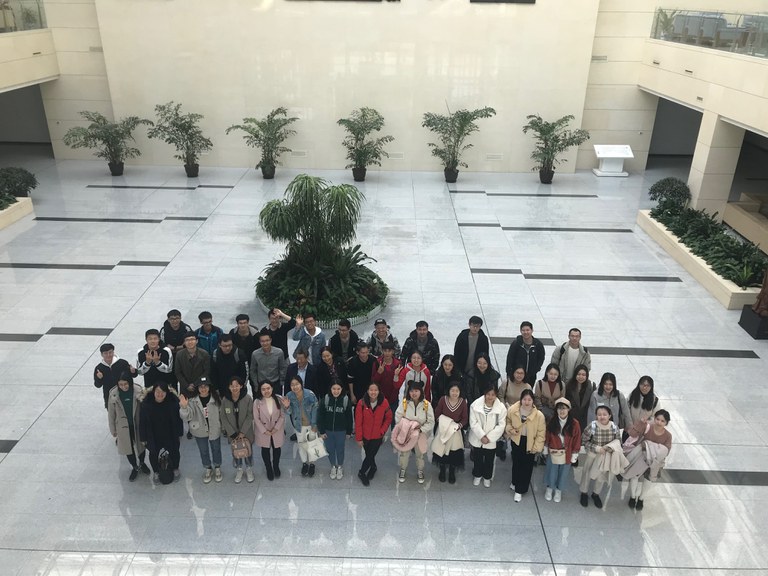
Progetto Heart, l'esperienza di Li Yuan and Nuoya Chen
Il progetto Heart- finanziato con circa un milione e 500mila euro dalla Commissione Europea nell’ambito del programma Horizon 2020 e coordinato dalla Professoressa Francesca Spigarelli. - ha l'obiettivo di formare sei giovani dottorandi nel settore dell’Internet delle Cose applicato alla salute, fornendo loro competenze multidisciplinari, ingegneristiche, giuridiche ed economiche, nonché una conoscenza approfondita delle caratteristiche del promettente mercato cinese. Abbiamo "raggiunto" due di loro in Cina, Nuoya Chen e Li Yuan, che ci raccontano la loro esperienza .
Li Yuan
"My research focuses on tranborder data flow regulation"
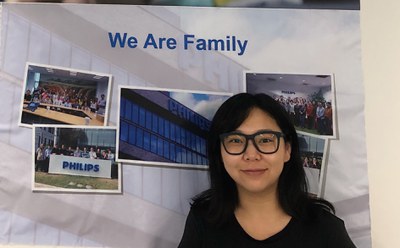
My name is LI Yuan, ESR 5 in HEART project. Before joining the HEART, I obtained the Bachelor of Engineering in telecommunication engineering, Master of Science in intellectual property management, and LL.M. in intellectual property and competition law. I am also a practitioner in patent prosecution in China.
Why did you want to be part of the HEART PhD team?
The HEART framework was very attractive when I received the call for application. Interdisciplinary training is the main reason that I applied.
Which exactly are your tasks within the HEART project?
My research focuses on tranborder data flow regulation, specifically between the European Union and the People’s Republic of China.
Which, in your view, will be the best results of the HEART project in terms of impact on society in the future?
Being the very first industrial Marie Curie project focusing on interdisciplinary training, the HEART project could not only improve the significance in the scientific research, but also to provide a model of how young researchers could actually benefit from the interdisciplinary training approach as well as industrial participated training approach.
Since you have already performed some secondments abroad, which was your favourite experience so far? Why?
HEART has provided very well-organized secondments in various fields, including electronic engineering, computer science, legal staudy and international business strategy.
What was the main challenge for you so far?
Language in Italy seems to be a problem for me. Besides, the mobility rule makes me very difficult to balance my family and work.
How long are you going to be in China? How is your experience there as Chinese PhD of an EU funded project?
I will stay in China from early March to late August 2019. I have both positive and negative experiences in the secondment. Yet, being a Chinese citizen working for an EU funded project in China, it is easier for me to establish contacts and collaboration opportunities in the related fields.
What do you like most of being a young researcher? Would you recommend this position to young students?
I have high degree of freedom for my research focus. Yes I will recommend this position to young students.
Nuoya Chen
"The HEART project led me to exciting secondments at KU Leuven, UCAS, Jacobs University and Philips Research Eindhoven"
I am an economist by training; my background lies in international business, international finance, banking, regulation and in development Theory and policy. My Master’s degree came respectively from University of Paris XIII and University of Witwatersrand, Johannesburg. I worked in two research programs in London and did my internship at the Institute for Security and Development in Stockholm and at 180 Degrees Consulting in Berlin before joining the HEART project.
Why did you want to be part of the HEART PhD team?
I am very interested in AI, big data and their application in healthcare field. I hope I can create a platform which can benefit people in real life with the rapid advancement of technology. I also wish I can work in a multi-cultural team and in an interdisciplinary field. That is why I decided to join the HEART project.
Which exactly are your tasks within the HEART project?
My research topic is about finding an applicable and ethically responsible business model for the Internet of Healthcare Things in China and in Europe. By digging into the needs from the current healthcare system in Europe and in China, I get to move to the vital part of my job where I interact with stakeholders such as doctors, technology companies, welfare fund managers, insurance providers, and most importantly the general population to find out how the Internet of Healthcare Things can remedy the gaps in the current healthcare system.
Which, in your view, will be the best results of the HEART project in terms of impact on society in the future?
I hope I can find out how the Internet of Things can help the aging society to reduce healthcare costs; most importantly, I hope to find out how to help the elderly to live a happy and healthy life independently with the help of AI and IoT devices.
 Since you have already performed some secondments abroad, which was your favourite experience so far? Why?
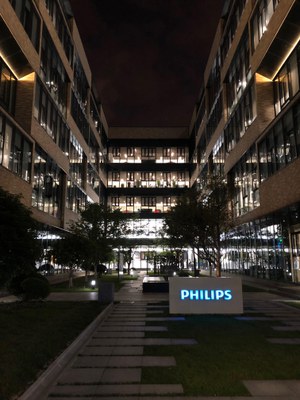
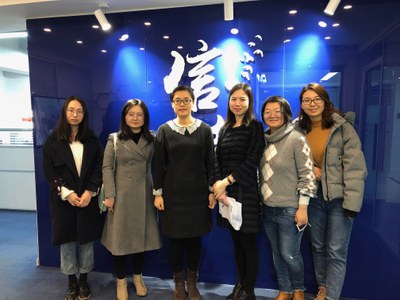
The HEART project led me to exciting secondments at KU Leuven, UCAS, Jacobs University and Philips Research Eindhoven. I enjoyed working in Philips Research Lab in Eindhoven. I met a lot of colleagues who came from totally different backgrounds such as business informatics, bio-engineering, electronic engineering, etc. All of them made it possible for me to see things from a different perspective. There are many opportunities to see how medical devices are created from scratch, how technology is helping people in real life, how different teams work, and how different cultures fit together. A lof of colleagues became my teachers and friends. The industrial secondment was both great fun and challenge.
What was the main challenge for you so far? (Scientific issues, living in new countries, language, mobility, something else...)
I would say frequent moving is the main challenge for me. I have done an Erasmus Mundus program for my Master’s program during which I moved every six months before joining the HEART project. Even with the previous experience, working in different contexts, with different organizational culture, colleagues from totally different backgrounds, using different languages for communication, remain a challenge especially when I need to concentrate on my research. Looking back, it has made me more relaxed, and open minded in a sense that it will greatly help me in my future career.
How long are you going to be in China? How is your experience there as Chinese PhD of an EU funded project?
I am going to be in China conducting field research until the end of August. I moved to Europe from China in 2013 and I have to say moving back to work has brought bit of a reverse culture shock. I do value my experience from both China and Europe. Having observed so many similar challenges for the healthcare system in Europe and in China, I hope my research will contribute to relieve some of the challenges faced by the healthcare system in Europe and in China.
What do you like most of being a young researcher? Would you recommend this position to young students?
I always want my work to help to bring positive changes to the world. Being part of the HEART project has given me the opportunity to make a difference. I would recommend this position to young students definitely.